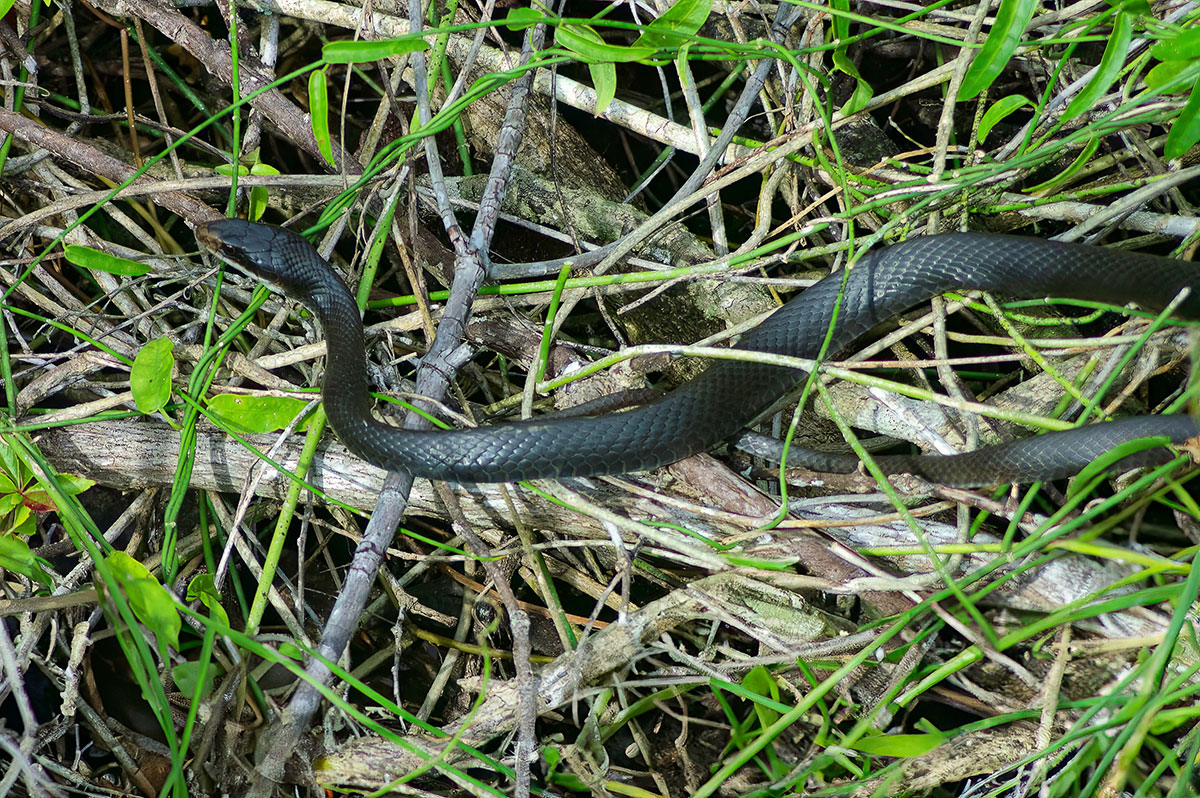
Snake entanglement in plastic mesh used for erosion control and wildlife exclusion continues to cause mortality. Recent Wisconsin case reports show multiple snake species trapped and often killed in small-aperture netting. The text outlines major erosion control and wildlife exclusion products, highlighting which designs appear most hazardous or relatively safer for snakes, and noting regulatory considerations. The authors stress that existing evidence is limited and that controlled field and in situ research is needed before firm, snake-safe product recommendations can be made.
Key Points
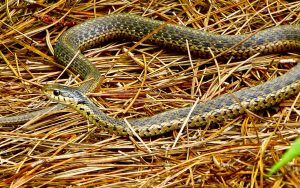
- Recent Wisconsin observations document multiple species, including Bullsnake, Common Gartersnake, Eastern Hognose Snake, Northern Watersnake, Western Fox Snake, and Butler’s Gartersnake, entangled in plastic erosion-control or wildlife-exclusion mesh.
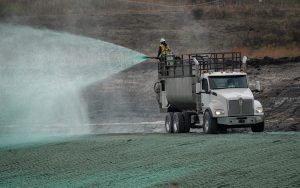
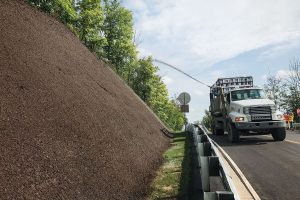
- Loose organic mulches, hydraulically applied erosion control products without mesh, and unwoven, unbounded organic fiber matrices appear least likely to entangle snakes but may not control erosion on steep or frequently inundated sites.
- Plastic products with small, square apertures and bonded filaments (around 1.27–2.54 cm²) are repeatedly associated with snake entanglement, while elongated-aperture “wildlife-friendly” meshes show reduced, but not eliminated, risk in preliminary trials.
- The authors call for familiarity with local erosion-control regulations and for rigorous, openly published experiments and field surveys to quantify entanglement risk and potential population-level impacts.