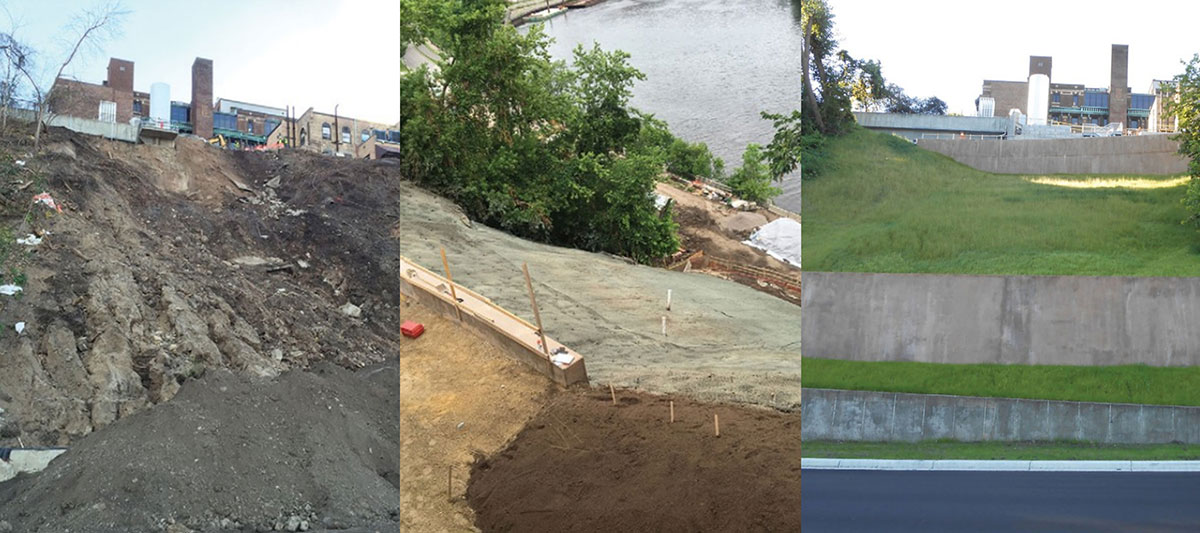
A June 19, 2014 mudslide above West River Parkway in Minneapolis dislodged 4,000 cubic yards of saturated soil from a 1:1 slope after heavy rainfall, forcing closure of a key Mississippi River corridor for more than 2 years. Barr Engineering, the Minneapolis Park and Recreation Board, Fairview, and contractors designed and built multiple retaining walls and an engineered erosion control solution using Futerra® 7020 TRM, ProGanics® Biotic Soil Media, and Flexterra® HP-FGM® as an integrated Green Armor System. After installation, the repaired slope withstood intense storms without sediment movement, supported rapid vegetation growth, and allowed the parkway to reopen on September 1, 2016.
Key Points
- 4,000 cubic yards of soil slid from a saturated 1:1 slope above West River Parkway on June 19, 2014 after 4.2 inches of rain fell on already saturated ground, closing the corridor for more than 2 years.
- Barr Engineering, MPRB, Fairview and contractors implemented a repair plan with five retaining walls, strict safety and historical requirements, and a total shared project cost in the range of 5.6 million dollars.
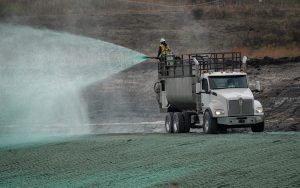
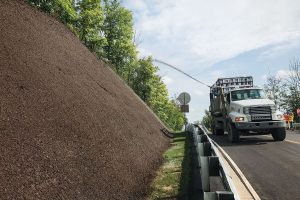
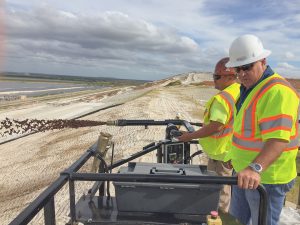
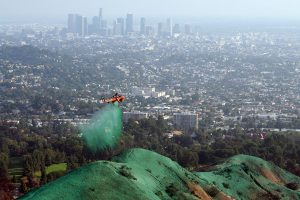
- Futerra 7020 TRM, ProGanics BSM and Flexterra HP-FGM were installed with a high-tensile steel wire system and soil nails to provide immediate protection, permanent surface stabilization and resistance to subsurface slippage.
- Subsequent storms delivering 5.1 inches of rain in July 2016 and 7.8 inches in August caused no sediment movement, vegetation became thick and uniform, and West River Parkway reopened on September 1, 2016.